 皆様
皆様
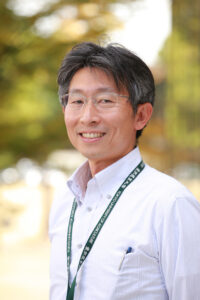
ようこそ!味細胞、消化管、膵臓などの研究をしている岩槻です。
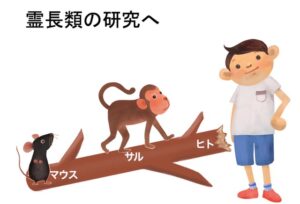
私たちは、オルガノイド培養法という新しい技術を導入し、サルやヒトなどの霊長類の味細胞、消化管、膵管を培養することで、これらの細胞の機能や再生について研究しています。私は2014年に食品企業から大学に移り、以前から興味のあった内胚葉の幹細胞培養を始めました。優秀な学生の活躍もあり、これまでにマウスおよびサルから味蕾オルガノイド、消化管オルガノイド、膵管オルガノイドの作製に成功し、それらの機能解析を進めてきました。最近では、サルからさらにヒトへと対象を広げ、ヒトのオルガノイド培養系を用いて、げっ歯類やサルとは異なるヒト特有の化学受容の研究に取り組んでいます。
ひとくちに化学受容といっても、栄養素を受容する場合もあれば、寄生虫など体にとって有害な異物を受容する場合もあります。近年、味覚の受容機構を利用して、栄養素だけでなく異物も感知・排除する仕組みが内胚葉由来の臓器に備わっていることが注目されています。味を感じるだけだと思われていた味細胞(正確には、味細胞と同様の化学受容機構をもつ細胞)が体のあちこちに存在し、有害なものの感知と排除に大きな役割を果たしているようなのです。
私たちの研究に興味を持たれた方、共同研究をご希望の方は、お気軽にご連絡ください。
岩槻 健
https://dbs.nodai.ac.jp/html/100000860_ja.html
Welcome! I am Ken Iwatsuki, and my laboratory studies taste cells, the gastrointestinal tract, and the pancreas.
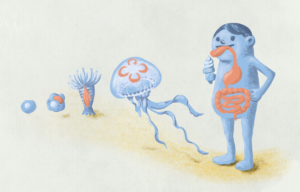
Using organoid culture, we investigate the function and regeneration of taste cells, gastrointestinal epithelium, and pancreatic ducts from primates. In 2014, I moved from the food industry to academia to pursue my long-standing interest in endoderm-derived stem cells. Together with talented students, we have established taste bud, intestinal, and pancreatic duct organoids from mice and monkeys and analyzed their functions. Recently, we have extended our work from monkeys to humans, using human organoids to study human-specific chemosensation that differs from that of rodents and monkeys.
Chemosensation includes the detection of nutrients as well as of harmful substances such as parasites. Increasing evidence suggests that endoderm-derived organs use taste-receptor signaling not only to sense nutrients but also to detect and expel harmful agents. Cells that were long thought to be involved only in taste, or cells that share their chemosensory machinery, appear to be distributed throughout the body and to play a major role in protecting it.
If you are interested in our research or would like to collaborate, please feel free to contact us.
Ken Iwatsuki(https://dbs.nodai.ac.jp/html/100000860_ja.html)